
CRIME AND CORRUPTION
A Police HQ, Wind Farms, and Natural Gas: Mapping China’s Investments in Europe
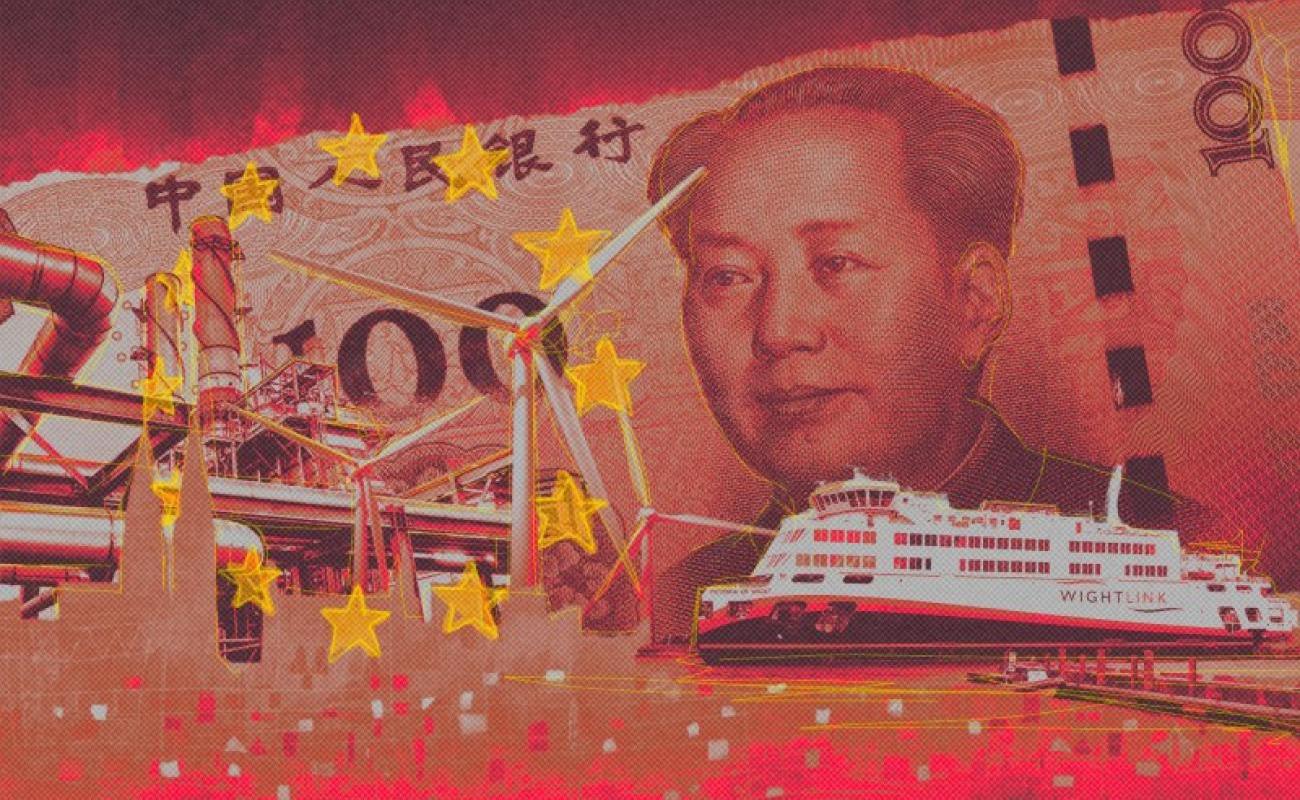
Through an opaque network of shell companies in the British Virgin Islands and Luxembourg holding firms, an agency that manages China’s foreign reserves has discreetly scooped up stakes in Europe’s critical infrastructure, utilities, and real estate.
Key findings:
- By piecing together fragmented European corporate registries, reporters mapped out the European assets held by an agency overseen by China’s central bank.
- They found that by routing investments through a web of Luxembourg shell companies and offshore jurisdictions, Beijing’s European footprint remains largely invisible to the general public.
- Experts warned of increasing opacity around company ownership in Europe that effectively prevents the public from knowing who controls critical infrastructure.
From a gas company in Spain to a police headquarters in Belgium, an agency directed by China’s central bank has been quietly acquiring stakes in companies and properties across Europe over the past decade.
By trawling through data from European business and land ownership registries, reporters were able to uncover a complex web of offshore Caribbean companies and Luxembourg holding firms through which this state agency holds its assets — and effectively keeps its ownership out of the public view.
While investors of any origin routinely use offshore vehicles and elaborate corporate structures for tax efficiency, the findings give a rare insight into how the authority that manages China’s foreign exchange reserves, the State Administration of Foreign Exchange (SAFE), makes investments in Europe.
SAFE is known for shrouding its investments and decision-making processes in secrecy, according to experts who focus on China’s foreign investments and trade.
“SAFE recently has gone to significant lengths to mask the size of its investments, so it clearly is keen to stay out of the limelight,” said Brad Setser, a fellow at the Council of Foreign Relations focused on China and ex-deputy assistant secretary of the U.S. Treasury.
About the OpenLux Project
OCCRP and partners have now identified 28 Luxembourg-registered companies linked to SAFE that have over the past 14 years acquired equity stakes in an eclectic range of European assets including a fiber-optic cable company in France, wind farms in the U.K., and the building housing a luxury hotel in the Netherlands.
Most of the Luxembourg holding firms have never been publicly linked to SAFE until now.
The Risks of Opacity
The European Parliament and European intelligence agencies have previously expressed concern over the risks of economic dependence, espionage, and sabotage connected to China’s economic presence in critical infrastructure and strategic sectors across the EU.
“It is perfectly clear that ambiguous or hidden ownership structures, especially in strategic economic or infrastructure sectors, can pose a massive risk,” Engin Eroğlu, a German member of the European Parliament representing the centrist Freie Wähler, told OCCRP.
“We already know from the US that Chinese companies, some of which are state-owned, specifically buy land adjacent to military facilities… A similar problem could therefore arise in Europe if we do not gain a clear overview of this non-transparent approach,” he added.
Yet Mario Esteban, a professor in East Asian studies at the Universidad Autónoma de Madrid, cautioned that such concerns should be weighed against Europe’s economic need for Chinese investment.
"There's a fine line between avoiding overdependence and ending up demonizing all investment that comes from China,” he said. “I think we need a narrative with a little more caution, and an understanding that some of these investments can genuinely generate added value for our country.”
He warned though of an increasing tilt towards a lack of transparency in company ownership — by China and other major investors.
“It's not exclusive to China,” he said. “There is a more generalized tendency towards opacity.”
While the BVI, a jurisdiction historically known for its high level of corporate secrecy, has recently rolled out a new register of “ultimate beneficial owners,” companies that are majority owned by foreign governments are not required to file this data.
When reporters requested ownership information for the SAFE-linked firms, they were given an error message, and the BVI’s registry did not respond to an additional request sent by email.
But unpicking SAFE’s holdings was difficult inside Europe too, requiring reporters to painstakingly piece together the limited information available in public records.
A ruling in 2022 by the EU’s Court of Justice, which rolled back a legal requirement to make beneficial ownership registers in the EU accessible to the public, has made uncovering these structures even more difficult, said Alex Cobham, the chief executive of the Tax Justice Network.
“We should be afraid of anonymity,” he told OCCRP. “It is better for all of us to know who owns real estate or critical infrastructure.”
Reporting contributed by Jared Joseph (OCCRP), Alicja Pawłowska, Daniel Flis (FRONTSTORY.PL/VSquare), Lars Bové, David Adriaen (De Tijd), Jérémie Baruch, Guillaume Daudin, Manon Romain (le Monde), Sergio Sangiao, Ignacio Carrascón (InfoLibre), and Nick de Jager (FTM).